Jesus said in Matthew 24:29,
 Immediately after the distress of those days
'the sun will be darkened,
and the moon will not give its light;
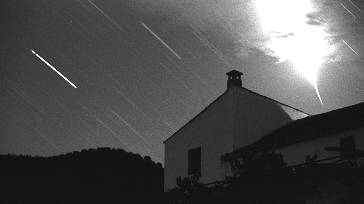
the stars will fall from the sky,
and the heavenly bodies will be shaken.
The interpretations of Jesus teaching from the Olivet Discourse vary because of the different approaches to Scripture. The Dispensationalist tends to interpret the Bible literally. This is a good thing. As an Amillenialist, I agree we must allow the grammatical, historical approach to be a guide in our interpretations. However, when it comes to prophecy, we quickly see the radical departure of the two positions.
For the Dispensationalist, the method tends to be to interpret prophecy literally when possible and to treat prophecy as if it is a historical narrative. There is also the approach that has been discussed in other places of interpreting prophecy from one of two perspectives. Do we start with the Old Testament to interpret the New, or do we allow the Apostles to interpret the Old in light of Christ and His work?
As for the above prophecy, the Amillenialist recognizes that prophecy often contains elements within the same verses of dual events being recorded together. In other words, prophecy is not a literal historical narrative, but often contains multiple events written together.
What makes recognizing this interpretive method important is the fact that Jesus predicts events to His Apostles that were to occur in their lifetime as well as at the end of the age. This has caused many headaches for us westerners. How many movies have you watched where a skeptic hears about a prediction that he believes will not happen because in his mind it is just not possible? And then it happens!
The Dispensationalist sees the destruction of Jerusalem being tied to the above cited verse. Since the above cited verse happens at the Second Coming of Christ, the destruction of Jerusalem must also happen right before Christ's coming.
The Amillenialist recognizes that Jesus does predict the destruction of Jerusalem in the generation of the Apostles. History tells us that Jerusalem was destroyed in AD 70. From here we see that there may be a dual fulfillment. That at the end of the age, there may be another greater fulfillment of this teaching. With this framework, the Amillenialist sees that Old Testament types and shadows of an earthly city points to an even greater fulfillment in the church and her enemy, Babylon the Great Harlot.
The Amillenialist does not need to read newspapers to see if the end is about to happen. Verses are often wrenched out of their context to be applied to our modern newspapers. The Bible is not a newspaper.
Every generation must be watchful. For antichrists come in every generation. Even in recent history, Germany's Hitler fulfilled in some respects the Man of Sin. He claimed for himself the role of deity. Christmas carols were sung to him by Germany's children. Prior to Hitler there were many others. Even some of the Protestant Confessions claimed the Pope as the Man of Sin. Yet the end is still to come.
Not only is prophecy not a historical narrative, it also uses symbolic language to describe the future. The literalist may say that God could darken the sun, but are we really going to say "stars" or other suns are going to fall out of the sky on to the earth? Of course not.
Jesus is quoting an Old Testament passage that was used to describe a major catastrophic event in the life of Israel. In the same way, at the Second Coming, the events of history are being described as catastrophic. What makes the Second Coming different from other events is that it will be worldwide in its scope. So although every generation has its own watch for local antichrists, at the end of the age there will be a worldwide man of lawlessness whom Christ destroys by His Coming.
In conclusion, we all must be watchful. The Christian's hope is not in this age, but in Christ. Christ has left us in this age to contend and struggle with the evil of this age. He has left us here to go and make disciples. We do so knowing knowing full well that Jesus sits at the right hand of God, ruling and reigning from David's throne. Knowing that Christ has all authority in heaven and earth, let us be faithful in going about the work He has called us to do.